

One of the only Culturally Responsive Conversation Cards for Adolescents.
Created by a Psychologist and Mom. Backed by research.
About Us
Emotional regulation is a cornerstone of development, fostering mental well-being, self-confidence, conflict resolution skills, and a strong sense of identity. For many adolescents, especially those navigating life in the margins, the tools traditionally offered for emotional regulation often fall short. These conversation cards have been thoughtfully designed to facilitate meaningful discussions about emotions, all while incorporating cultural awareness and sensitivity.
These conversation cards are more than just a tool—they’re a bridge. A bridge to deeper self-awareness, stronger connections, and collective healing. Created through a multidimensional lens, the cards aim to nurture collective healing by encouraging self-awareness, self-compassion, and grace. They validate experiences, support the process of identifying and repairing harm, and provide knowledge to encourage empowerment. Through using these cards, you’ll discover creative approaches to emotional regulation and embark on a journey of healing that honors both individual and shared experiences.


![A motivational poster with a green and white design. The text reads: "Identifying Emotions. Your experiences shape your reality. If you had to describe [insert emotion] in your own words how would you?"](https://images.squarespace-cdn.com/content/v1/6783fcdc6236f340116b14f4/540c7ef3-5175-43e0-9ab3-fb6fdf28d57b/12A.png)


Intended Impact of Hey Let's Talk Conversation Cards
-
Encourage adolescents to identify and articulate their emotions using a culturally competent perspective.
-
Foster an understanding of how cultural identity and experiences influence emotions and coping mechanisms. This further provides validation for emotions that arise from living in sociopolitical and marginal contexts.
-
Create opportunities for open and reflective conversations between families, peers, or mentors. Encourage use of the cards as a medium to deepen bonds, build trust, and promote mutual understanding.
-
Equip adolescents with practical tools to address conflict, manage stress, and regulate emotions effectively.
-
Inspire adolescents to practice self-awareness, grace, and self-compassion. Facilitate conversations that validate experiences, repair harm, and contribute to individual and community healing.
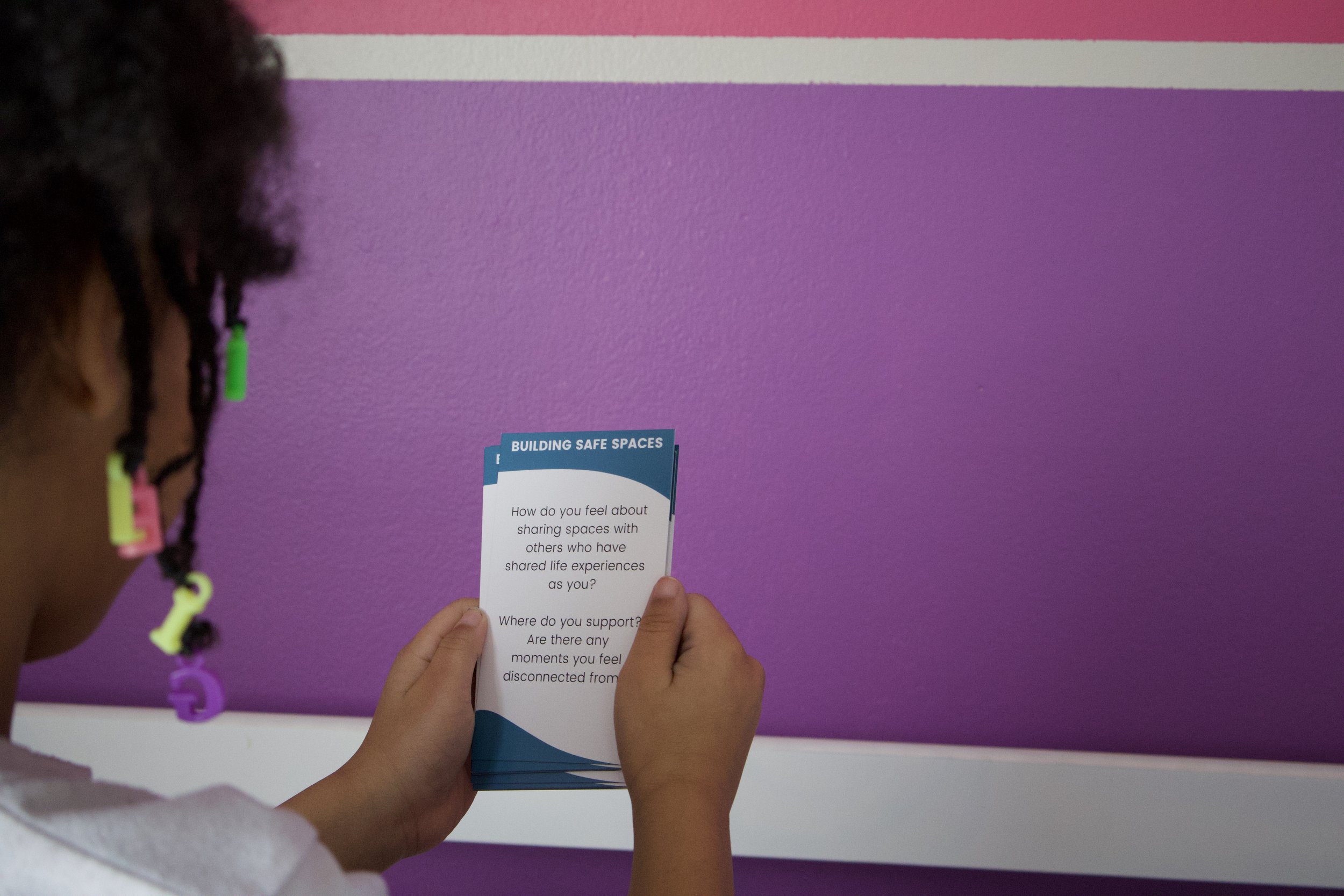
How To Use
These cards were intentionally designed to foster reciprocal healing. There’s no single “right” way to use them—they are as versatile as the settings in which they can be used. They work equally well in structured environments like therapy sessions, classroom icebreakers, or after-school programs as they do in casual spaces like the dinner table, a cozy couch, or a conversation with a peer. They also serve as excellent journaling prompts.
Unlike traditional card games, these cards are meant for repeated use. Each interaction with them deepens the conversation, strengthens self-awareness, and offers new insights. Whether used in a formal setting or a relaxed moment, both participants are sure to gain emotional clarity, strengthen connections, and deepen reflection in the process.
In each deck you'll find 75 conversation cards seperated into 5 catagories - Identifying Emotions, Building Healthy Self-Concept, You and The World Around You, Raising Awareness, and Building Safe Spaces.

Because Healing Begins At Home - In many families, conversations about emotions can be challenging. Hey, Let’s Talk offers families a simple yet powerful way to bridge this gap. These cards create a space for open, judgment-free conversations, empowering parents and caregivers to guide their children in exploring and understanding emotions. For families struggling to address complex topics—such as stress, identity, or systemic inequities—the cards offer culturally aware prompts that validate their unique experiences. This helps normalize discussions about feelings, creating a foundation for trust, understanding, and emotional growth within the family unit.
Because We Heal Together - Healing is not an isolated process; it’s something we do together. These cards provide a platform for group conversations in community settings, such as after-school programs, youth groups, or support circles. They encourage participants to share their stories, listen to others, and build empathy. Over time, this strengthens bonds and creates a sense of belonging that’s crucial for community well-being.
Because We’re Cycle Breakers - For many families, patterns of silence, misunderstanding, or conflict can persist across generations. Hey, Let’s Talk offers a way to disrupt these cycles by introducing tools that promote emotional awareness and healthy communication. When one person in a family learns to regulate their emotions and communicate effectively, the ripple effect can inspire others to do the same, creating a generational shift toward healing and understanding.